
Public trust in institutions is eroding, and the way trust is established is being redefined.
You can see it in every sector: authority, expertise, and institutional credibility no longer take shape the way they used to. In the U.S., trust in major institutions like government and media has fallen to near-historic lows in the United States. At the same time, the rise of social media has reshaped how credibility is formed and challenged. The role they once played in shaping public opinion has been taken over by Individuals such as creators, activists, and commentators. The traditional hierarchies of information have been flattened, and audiences have become more active, skeptical media consumers.
Nonprofits and public interest groups once built trust through institutional signals such as formal language, polished reports, and authoritative messaging. But today, audiences increasingly look for authenticity, transparency, and a cultural competence that isn’t solicitous.
In this report, we share our insights based on years of experience and highlight recent examples of work that helped our partners build trust.
Leading with Integrity: Your Brand Is a Promise to Your People
When a brand clearly reflects an organization’s purpose and aligns with how it operates, it becomes a powerful tool for building trust over time.
A brand is an articulation of your values and a commitment to your mission. At the same time, it must convey what you do in a practical way. When done well, brands create alignment across everything from messaging to visual identity to organizational behavior.
We talked to current and former partners about the goals for their brands and what problems they helped to solve.
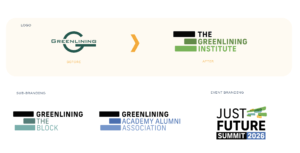
As Ashley Johnson of the Greenlining Institute describes, the goal of rebrand is not to abandon what came before, but to evolve it with intention:
“Leading The Greenlining Institute’s rebrand was a thought exercise in balancing new priorities with our established reputation during a politically challenging moment. With Fenton’s partnership, our team created an identity that reflected both the momentum of our advocacy work and the deep love we have for our communities, keeping us grounded in our history and our founding roots in Dr. King’s vision. Ultimately, the refresh helped us show up with greater clarity and authority about who we are, the work we do, and where we’re going. The new brand, website and overall visual design are all assets in building the credibility and trust we need to pursue our mission.”
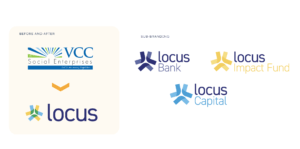
For Locus, their brand challenge was structural. Bringing multiple programs under a single, trusted name required discipline and nuance. As VP of Brand Strategy Valerie Lee explains:
“Our rebrand included a fundamental decision: changing the name of our parent organization from “Virginia Community Capital” to “Locus,” the name of a subsidiary that already carried deep credibility in the communities we touch. The challenge was bringing the full breadth of our organization under that banner without losing the nuance of each of our unique business lines. With Fenton’s strategic guidance, we developed a new brand that could unify our work while still allowing different parts of the organization to speak with distinction and purpose. The result is a stronger, more cohesive presence that helps us communicate who we are today, build trust across the places and sectors we serve, and invite new partners to advance our collective mission.”
In both cases, branding was not about aesthetics (or, at least not aesthetics alone. We do appreciate style!). It was about making values visible and actionable.
Campaigns: Building Trust to Change Minds
For issue advocacy campaigns, especially those aimed at audiences who may be skeptical or opposed, credibility determines whether a message is even considered.
Building that credibility begins with an understanding of an audience’s awareness of an issue or topic. From there, strategic audience mapping helps uncover values, motivations, and points of resistance that shape how messages are received. Messaging that feels overly polished, moralizing, or disconnected from lived experience can trigger disengagement. Campaigns that build trust prioritize relatability, specificity, and emotional truth. They reflect the language, concerns, and cultural context of the audience they are trying to reach.
This often requires creative choices that favor credibility over control. Showing real people with real stories. Letting stories unfold without over-explaining. Allowing audiences space to draw their own conclusions. Changing minds is not about delivering a perfect argument. It is about building enough trust for someone to stay open, reconsider, and see themselves and the issue in a different perspective.
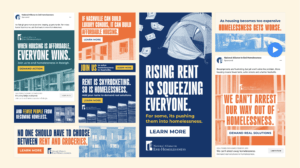
For the National Alliance to End Homelessness, the challenge was reaching audiences in a way that felt clear and grounded. Our work with them needed to make the issue easier to understand and help people to connect without feeling talked at. As Tom Murphy, VP of Communications, puts it:
“The public’s attitudes on homelessness are complex and sensitive, often blending feelings of discomfort, compassion and frustration. We knew that creative would need to be simple enough to cut through that confusion but also able to meet audiences where they were, without judgement. That’s how we start to build trust, opening the door for people to engage with the issue on a deeper level, and ultimately to support real solutions.”
Principles for Credibility
Credibility is not built through polish alone. If perception is the key to earning trust , creative choices must be strategic. In a skeptical environment, credibility is built through alignment between message, tone, visuals, and values, and reinforced through how consistently an organization shows up. Some guidelines:
- Clarity over formality. Use direct, colloquial language that meets people halfway – name the problem in the same ways it’s being discussed more widely.
- Repetition and familiarity. Unified visuals, tone, and messaging builds recognition and compounds trust over time. Show up consistently, and familiarity and affinity will grow.
- Authentic representation. Depict people and perspectives in ways that feel specific, truthful, and grounded in lived experience.
Looking Ahead: New Opportunities for Connecting with Audiences
As trust continues to shift, so do the opportunities for how organizations build it. In digital spaces, audiences expect more immediacy, transparency, and participation. Content that feels responsive, human, and in dialogue with the moment outperforms content that feels static or overly produced. To build credibility with future audiences, organizations need to show up in ways that are more conversational and adaptive while still grounded in a clear point of view.
If your organization is navigating how to show impact, build credibility, or reimagine how your story is told, we would welcome the opportunity to work together. Get in touch.