

We have been at your side, building movements, shaping conversations, and helping you win your biggest challenges for more than four decades.
And today we are proud to announce Fenton Fundraising — formalizing and expanding the work we have provided for decades to meet your fundraising needs with precision and the greatest urgency, especially in this moment of crisis, when raising life-changing funds has never mattered more.
We are skilled communicators and fundraisers with deep practitioner expertise, leading nonprofit development programs inside legacy organizations, managing complex donor portfolios, and constructing the intricate backbone of strategy, infrastructure, and stewardship that drives multi-million-dollar fundraising campaigns.
Joining forces with global fundraising experts, including Hewitt and Johnston Consultants’ President Michael Johnston, a transformative digital and integrated fundraiser with over 30 years experience, our work spans the full development lifecycle, from annual planning and major gifts strategy to institutional and corporate giving, campaign fundraising, digital and email programs, and fundraising events ranging from intimate donor gatherings to signature galas.
Nonprofits have always faced a choice: a fundraising consultancy that raises money, or a communications agency that tells stories. Fenton Fundraising ends the tradeoff. We unite issue-area expertise, strategic messaging, narrative development, earned media, and donor engagement into a single, surround-sound approach that moves people from awareness to action to lasting commitment.
For us, the first gift is an entry point, and everything that follows is designed to move donors toward sustained and growing support. We create and deploy fundraising initiatives that are unique to each organization and the donors who fuel their vital work, cultivating genuine relationships through shared values and strategies that build long-term giving programs that sustain organizations through hard years.
Whether we’re working on a capital project, a year-end campaign or a multi-year giving program, our promise remains what it has been for four decades — commitment to you. Commitment to social causes. Commitment to the communities we all care about.
We don’t just talk about impact. We make it happen.
Yann Hatchuel
Beyond the Creative: The Behavioral Science and Leadership Truths Redefining Modern Fundraising

After 38 years in the fundraising trenches, I’m going to let you in on a little secret: Your fundraising isn’t failing because your copy needs another rewrite.
It’s not failing because the font size on your flyer is off, or because you couldn’t find the perfect stock photo of a smiling child. The real bottleneck holding back your nonprofit’s growth isn’t a lack of creative assets. It’s a fundamental misunderstanding of behavioral science, coupled with a few massive leadership decision-making blind spots.
Through our Behavior Boost Unit, we’ve mapped out the subtle, psychological triggers that turn passive bystanders into passionate monthly supporters.
If you want to stop guessing and start scaling, it’s time to lean into data and look at how the commercial sector uses behavioral economics to win. Here are three real-world case studies that prove why psychology wins over guesswork every single time.
Case Study 1: The $0 Dollar Sign (How Less Became Way More)
We love to overcomplicate things. We assume that to double digital donations, we need a million-dollar website overhaul. But behavioral science shows us that generosity often starts with a single, tiny, beautifully friction-free moment.
A while back, we partnered with the folks at the Children’s Health Foundation for a digital giving experiment during Advent. We didn’t change the mission statement. We didn’t rewrite the appeal. We made one tiny, seemingly insignificant design tweak to the online donation form: We took away the dollar signs ($).
- The Result: The average holiday gift size more than doubled.
- The Brain Science: In behavioral economics, a currency symbol like a “$” acts as a cognitive “pain trigger.” It instantly reminds the human brain of loss—literally, “money is leaving my account.” By removing that tiny vertical line and an S, we lowered the psychological barrier. The form shifted from looking like a transactional bill to a friction-free canvas for pure generosity.
Case Study 2: The Holiday Ornament (Stop Giving Donors Stuff, Give Them Something to Do)
As year-end approaches, charities panic and start looking for “premiums”—little trinkets or keychains to mail out to donors as incentives. But what if the best gift you can give a donor isn’t a plastic gadget, but agency and psychological ownership?
Our team tested an alternative across more than 25 different nonprofits, including the Cambridge Memorial Hospital Foundation. Instead of a standard calendar, we mailed donors two physical holiday ornaments. One was for them to keep. The other was a return tag, where we invited them to write a handwritten note of love, hope, or encouragement to someone the organization serves.
- The Result: Massive response rates and a flood of deeply personal return mail.
- The Brain Science: The moment a donor picks up a pen and physically writes a message, they transform from a passive pocketbook into an active participant. It triggers identity and commitment. Signing that tag forces a person to behave exactly like the version of themselves they want to be: compassionate, generous, and deeply woven into a community. Don’t just find another thing to give your donors. Give them something meaningful to do.
Case Study 3: The Boardroom Wall (Fixing the Leadership Overload Trap)
You can have the best behavioral triggers in the world, but they will fall flat if your internal culture is crippled by risk aversion, board hesitation, or C-suite caution.
We were called into a major North American nonprofit to diagnose a fall campaign that was completely tanking. The staff was burnt out, data systems were broken, and every single department was shouting over the other to get their piece of the donor’s attention. The executive team’s brilliant solution? “Just blast the whole database. Committed donors will figure it out.”
Spoiler alert: They won’t.
So, we did a little visual intervention. We took every single piece of communication that every department planned to send to a donor over that 90-day period, and we taped them all to a boardroom wall. Then, I asked the leadership team to stand up and point to the pieces they were willing to cut.
- The Breakthrough: For the first time, leadership had to face the monster they created. Nobody in that room had lied; every individual piece had been approved because it looked fine in isolation. But they had approved the aggregate workload without ever realizing it. Seeing the chaos on one single wall forced them to face reality. They cut the noise, consolidated the requests, and gave the fundraising team the authority to build a clean, respectful donor journey.
The Takeaway: Are You Ready to Scale for Good?
Progress is great, but change is hard. If your nonprofit is struggling to hit its growth goals, look past the creative assets. Take a hard look at your internal culture, audit your donor journeys, and stop letting leadership blind spots dictate your strategy.
If you want to dive deeper into how we’re using our new Scale for Good framework to break down these exact organizational barriers, send us a message. Let’s stop guessing and start building something that actually works.
Post written by Michael Johnston, Fenton Fundraising Senior Counsel, and originally published on hjcnewmedia.com.
Reclaiming the Road: A Community Green Book for 2026
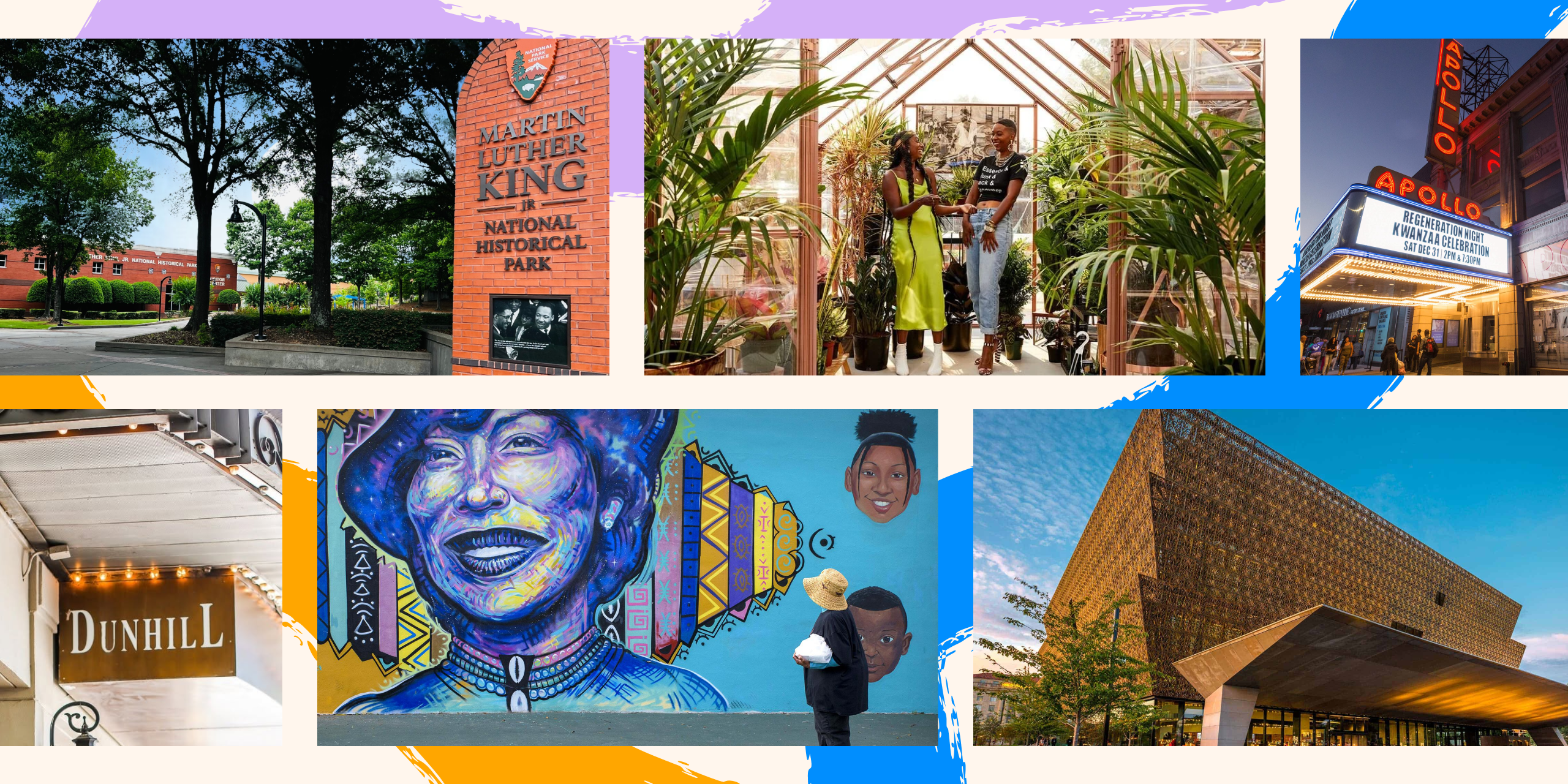
For many, summer means travel — exploring new places, seeking adventure, making memories. But for much of American history, this freedom was dangerous, controlled, and out of reach for millions.
Throughout history, Black people’s movement has been heavily controlled, restricted, and surveilled. Whether heading to a nearby restaurant or crossing state lines, the desire to move freely often invited harassment, violence, or worse — forcing Black travelers to remain vigilant not just about safety, but about where they would even be welcomed.
Between 1936 and 1966, during the Jim Crow era, Victor Hugo Green, a Black postal worker from New York City, published the Green Book, also known as The Negro Motorist Green Book or Green-Book. It listed lodging, diners, gas stations, and other businesses welcoming to Black customers by city and state, primarily in major cities like Chicago and Detroit. This book served as an essential resource for Black Americans to explore their country, engage in the economy, and participate as curious, active citizens for decades until its discontinuation shortly after the Civil Rights Act of 1964.
As we approach Juneteenth, the distance we’ve traveled — and the distance still ahead — comes into focus. Today, Black Americans can access public spaces without legal restrictions, control their movement, participate fully in the economy through an increasing number of Black-owned businesses, and actively engage as civic activists striving to expand rights and freedoms for themselves and their communities. Yet, recent years have shown that racial hostility and the threat of violence against people of color are on the rise. Protecting our peace and ensuring our safety as we move through the world remains as urgent as ever.
In honor of Green’s legacy and Juneteenth, Fenton members of the Inkwell developed and designed our own Green Book, celebrating a list of people, places, and things where we live. Our 2026 Green Book features Black historic sites, Black-owned restaurants and businesses, cultural institutions, and notable local luminaries. We hope others use this list in their daily travels over the year as a reminder of our past and how far we still have to go to be a country where everyone is able to move, explore, and live with full freedom.
Download Now
Limitless Thinking Breeds Innovation

Last week, my husband and I visited our friend EW to celebrate his new home. As tends to happen at these gatherings, the adults settled upstairs while the children disappeared into the playroom. The evening hummed along until our godson’s laughter cut right through our conversation. His full-bellied, uninhibited laughter captured our attention just as my godson called out for his father to come downstairs. EW re-emerged from checking on the children with a wide smile. “They built a ramp,” EW said. The adults leaned in, curious. “An entire ramp?” I asked. “Yes,” he said, “and they’re still adding to it.”I marveled at the audacity of their imagination — just pure, unencumbered imagination and a ramp.
Children don’t experience problems as barriers; they experience them as invitations. Yet somewhere between childhood and adulthood, the accumulation of heartbreak, failure, bureaucracy, and consequence begins to quietly crowd out that instinct. At Fenton, our work as strategists is to help clients solve some of the most urgent problems of our time — protecting voting rights, advancing climate action, ensuring reproductive autonomy, fighting for equity and access to quality education. These challenges demand boldness, but often when clients come to us, their thinking is already constrained: by budgets, by board directives, by the very real fear of getting it wrong. The weight of consequence has replaced the courage of imagination. Reclaiming that child-like sense of limitless possibility is essential to seeing our way through the problems that challenge our ability to progress as a society.
Start with the absurd, then work backward.
Innovation rarely begins with a realistic plan. It begins with a question that sounds almost too big: What if we could reach every eligible voter before the next election cycle? What if climate action actually felt like an opportunity instead of a sacrifice? Strategic thinking gets sharper when it starts unbound. When working with clients, we encourage them to articulate their most expansive vision first — without a budget line in sight — and then engineer backward toward what’s achievable. The ramp gets built one cushion at a time.
Invite the unexpected voices into the room.
Our godson didn’t build that ramp alone. The magic was in the collaboration. A room full of children who hadn’t yet learned to defer to each other’s assumed expertise was able to make something out of nothing. In practice, this means bringing stakeholders into strategy sessions who wouldn’t typically have a seat at the table: the communications coordinator, the community member, the skeptic. Diverse cognitive inputs break the gravitational pull of how it’s always been done.
Use emerging technology as a thinking partner, not just a tool
You’ve heard it repeated ad nauseam — artificial intelligence is reshaping how organizations can prototype, test, and communicate ideas. Rather than seeing AI as an opponent, we’re finding ways to use LLMs to make our work more impactful for clients. This looks like optimizing our research and development framework, drafting audience personas at scale, and stress-testing messages across demographics in real time. The technology doesn’t replace the strategist; it removes the ceiling on how many possibilities we can explore before committing to one.
Protect the ideation phase
Under pressure, organizations skip straight from problem to execution. The messy middle — where ideas are half-formed, contradictory, and unpolished — is where the best thinking lives. Build in explicit time for divergent thinking before convergence.
Normalize the pivot
Children don’t mourn the cushion that didn’t work; they find new ways to manifest their imaginative ideas. For organizations doing urgent, meaningful work, the fear of changing course can feel like failure. Reframing iteration as intelligence — not inconsistency — is one of the most liberating shifts we help clients make.
My godson and his friends’ ramp was structurally improbable and entirely glorious. Those bold and hilarious children weren’t in the playroom asking whether the budget had been approved. They weren’t worried about a reporting chain or if their messaging was 100% right. They were just building what felt intuitive and necessary for the moment. They stepped into their curiosity. That’s the posture Fenton brings to every client engagement: seasoned strategic expertise paired with the audacity to imagine that something genuinely new is possible because of the issues our clients are fighting for; incremental change won’t be enough.
Fenton Ranked Top Nonprofit PR Firm in the Nation by O’Dwyer’s
For more than four decades, Fenton has been doing one thing: powering communications for organizations that are changing the world. Now, O’Dwyer’s has recognized what our clients and partners have long known, ranking Fenton the #1 PR Agency for Nonprofits in the nation.
We are humbled by this milestone. But for a team that has spent over 40 years building the discipline of social impact PR from the ground up, it also feels like a natural next chapter in a much longer story.
What It Means to Be the Top Nonprofit PR Firm
O’Dwyer’s is the industry’s most respected independent ranking of PR firms. Being named the top nonprofit PR firm in their annual rankings reflects not just the strength of our work in any single year, but the consistency and depth of our commitment to the nonprofit sector over time.
Fenton was founded as the nation’s first social impact communications agency. That wasn’t a niche play. It was a bet that nonprofits, advocacy organizations, and mission-driven institutions deserved the same caliber of strategic communications that corporations had long relied on. Four decades later, that founding conviction drives everything we do.
We work across every issue area in the nonprofit space: health, education, the environment, democracy, racial justice, economic equity, immigration, and more. And we bring a full suite of services to each engagement, from strategic communications and digital strategy to advertising, creative, crisis communications, and beyond. Our clients don’t come to us for a single tactic. They come because they need a nonprofit communications agency that can see the full picture and move at the speed their missions demand.
Built for This Moment
The communications landscape has shifted dramatically in recent years. Legacy media is fragmenting. Digital platforms are in flux. Audiences are harder to reach and harder to hold. For nonprofits operating with limited resources,urgent timelines and within a challenging political moment, the stakes of getting communications right have never been higher.
That’s exactly the environment Fenton was built for. As a mission-driven communications partner, we don’t just adapt to change. We help our clients get ahead of it. Whether it’s building a digital-first campaign strategy, navigating a reputational crisis, or launching a creative initiative that breaks through the noise, our work is grounded in one question: what does this organization need to move its mission forward?
“This recognition from O’Dwyer’s is a reflection of the extraordinary people at Fenton and the clients who trust us with their most important work,” said Fenton CEO Valarie De La Garza. “Communications is a part of an essential infrastructure for organizations doing critical work in the world. Our job is to make sure that infrastructure is as strong, as smart, and as effective as the missions it supports. That’s what we’ve been doing for over 40 years, and we’re just getting started.”
Four Decades of Leading PR for Nonprofits
Rankings matter. But what matters more is the work behind them.
Over 40 years, Fenton has partnered with hundreds of nonprofits, foundations, and advocacy organizations to shape public conversation, shift policy, and build lasting movements. We’ve helped organizations find their voice during moments of crisis and opportunity alike. We’ve built campaigns that changed how people think about issues they thought they already understood.
Being named the top nonprofit PR firm by O’Dwyer’s is validation of that track record. It’s also a reminder of what’s ahead. The challenges facing the nonprofit sector are growing more complex, and the need for strategic, high-impact communications is only accelerating.
Fenton is ready for what’s next. We always have been.
Fenton is the nation’s first social impact communications agency, offering strategic communications, digital, advertising, creative, and crisis communications services to nonprofits and mission-driven organizations nationwide. Learn more about working with us.
"*" indicates required fields
Designing For Trust: Creating Brands & Campaigns That Earn Credibility

Public trust in institutions is eroding, and the way trust is established is being redefined.
You can see it in every sector: authority, expertise, and institutional credibility no longer take shape the way they used to. In the U.S., trust in major institutions like government and media has fallen to near-historic lows in the United States. At the same time, the rise of social media has reshaped how credibility is formed and challenged. The role they once played in shaping public opinion has been taken over by Individuals such as creators, activists, and commentators. The traditional hierarchies of information have been flattened, and audiences have become more active, skeptical media consumers.
Nonprofits and public interest groups once built trust through institutional signals such as formal language, polished reports, and authoritative messaging. But today, audiences increasingly look for authenticity, transparency, and a cultural competence that isn’t solicitous.
In this report, we share our insights based on years of experience and highlight recent examples of work that helped our partners build trust.
Leading with Integrity: Your Brand Is a Promise to Your People
When a brand clearly reflects an organization’s purpose and aligns with how it operates, it becomes a powerful tool for building trust over time.
A brand is an articulation of your values and a commitment to your mission. At the same time, it must convey what you do in a practical way. When done well, brands create alignment across everything from messaging to visual identity to organizational behavior.
We talked to current and former partners about the goals for their brands and what problems they helped to solve.
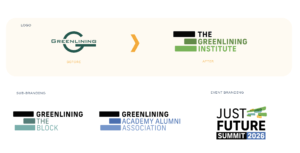
As Ashley Johnson of the Greenlining Institute describes, the goal of rebrand is not to abandon what came before, but to evolve it with intention:
“Leading The Greenlining Institute’s rebrand was a thought exercise in balancing new priorities with our established reputation during a politically challenging moment. With Fenton’s partnership, our team created an identity that reflected both the momentum of our advocacy work and the deep love we have for our communities, keeping us grounded in our history and our founding roots in Dr. King’s vision. Ultimately, the refresh helped us show up with greater clarity and authority about who we are, the work we do, and where we’re going. The new brand, website and overall visual design are all assets in building the credibility and trust we need to pursue our mission.”
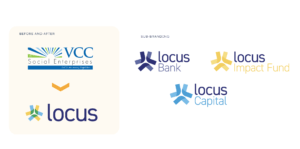
For Locus, their brand challenge was structural. Bringing multiple programs under a single, trusted name required discipline and nuance. As VP of Brand Strategy Valerie Lee explains:
“Our rebrand included a fundamental decision: changing the name of our parent organization from “Virginia Community Capital” to “Locus,” the name of a subsidiary that already carried deep credibility in the communities we touch. The challenge was bringing the full breadth of our organization under that banner without losing the nuance of each of our unique business lines. With Fenton’s strategic guidance, we developed a new brand that could unify our work while still allowing different parts of the organization to speak with distinction and purpose. The result is a stronger, more cohesive presence that helps us communicate who we are today, build trust across the places and sectors we serve, and invite new partners to advance our collective mission.”
In both cases, branding was not about aesthetics (or, at least not aesthetics alone. We do appreciate style!). It was about making values visible and actionable.
Campaigns: Building Trust to Change Minds
For issue advocacy campaigns, especially those aimed at audiences who may be skeptical or opposed, credibility determines whether a message is even considered.
Building that credibility begins with an understanding of an audience’s awareness of an issue or topic. From there, strategic audience mapping helps uncover values, motivations, and points of resistance that shape how messages are received. Messaging that feels overly polished, moralizing, or disconnected from lived experience can trigger disengagement. Campaigns that build trust prioritize relatability, specificity, and emotional truth. They reflect the language, concerns, and cultural context of the audience they are trying to reach.
This often requires creative choices that favor credibility over control. Showing real people with real stories. Letting stories unfold without over-explaining. Allowing audiences space to draw their own conclusions. Changing minds is not about delivering a perfect argument. It is about building enough trust for someone to stay open, reconsider, and see themselves and the issue in a different perspective.
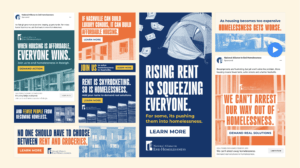
For the National Alliance to End Homelessness, the challenge was reaching audiences in a way that felt clear and grounded. Our work with them needed to make the issue easier to understand and help people to connect without feeling talked at. As Tom Murphy, VP of Communications, puts it:
“The public’s attitudes on homelessness are complex and sensitive, often blending feelings of discomfort, compassion and frustration. We knew that creative would need to be simple enough to cut through that confusion but also able to meet audiences where they were, without judgement. That’s how we start to build trust, opening the door for people to engage with the issue on a deeper level, and ultimately to support real solutions.”
Principles for Credibility
Credibility is not built through polish alone. If perception is the key to earning trust , creative choices must be strategic. In a skeptical environment, credibility is built through alignment between message, tone, visuals, and values, and reinforced through how consistently an organization shows up. Some guidelines:
- Clarity over formality. Use direct, colloquial language that meets people halfway – name the problem in the same ways it’s being discussed more widely.
- Repetition and familiarity. Unified visuals, tone, and messaging builds recognition and compounds trust over time. Show up consistently, and familiarity and affinity will grow.
- Authentic representation. Depict people and perspectives in ways that feel specific, truthful, and grounded in lived experience.
Looking Ahead: New Opportunities for Connecting with Audiences
As trust continues to shift, so do the opportunities for how organizations build it. In digital spaces, audiences expect more immediacy, transparency, and participation. Content that feels responsive, human, and in dialogue with the moment outperforms content that feels static or overly produced. To build credibility with future audiences, organizations need to show up in ways that are more conversational and adaptive while still grounded in a clear point of view.
If your organization is navigating how to show impact, build credibility, or reimagine how your story is told, we would welcome the opportunity to work together. Get in touch.
The Verdict Is In: It’s the End of Social Media (As We Know It)

After nine days of deliberation, the Los Angeles jury found Meta and Google liable for creating addictive products that harmed a young woman’s mental health, despite initial difficulties in reaching a decision. This bellwether ruling stands to set legal precedent for how courts rule either in favor or against Big Tech companies building platforms to capture our attention.
But this article isn’t about the ruling, though it matters. I’m writing to share that the social media era we’ve experienced over the last two decades is fading. Too often, social media companies like Twitter/X, Facebook, and YouTube rely on enshitification (also known as platform decay) to attract audiences, hook them with highly attractive features, and then slowly and intentionally degrade the platform to maximize profits.
We’ve observed this pattern recur with a disturbing regularity: A platform emerges and feels like a revelation. It’s social, creative, and genuinely useful. Then the investors arrive, the quarterly targets get set, and the rot begins. Algorithms that once surfaced content from people you actually knew are replaced by content engineered to provoke. Feeds fill with strangers, bots, and brand content optimized for engagement. To this point, more than half of social media traffic has been found to be driven by bots, often posting politically or financially motivated disinformation.
Lawyers argued that features like infinite scroll, constant notifications, autoplaying videos, and beauty filters made apps like Instagram and YouTube equivalent to engineered addiction mechanisms. Many experts are already calling the judgment Big Tech’s “big tobacco moment,” the moment at which the tobacco industry had to accept not only that their product was harmful, but also that they had known this and tried to cover it up.
So what comes next? Users have been signaling their answer for years. Brands and organizations would be wise to pay attention and use this moment as an opportunity for direct engagement with their supporters, donors, and key stakeholders.
I don’t believe people are abandoning the digital community or social media writ large. They are, however, abandoning the factory floor version of it. In the latest wave of migration, primarily to Bluesky, users are seeking an ideological alternative to increasingly corporate and algorithmically hostile platforms, stepping into a world fundamentally different in ways many are only beginning to grasp. Bluesky, Mastodon, and their federated counterparts are built on a different promise: that communities can govern themselves, set their own rules, and exist without a billionaire’s thumb on the scale. Meanwhile, platforms like Discord have built loyal, purpose-driven communities around shared interests rather than mass broadcast.
Canadian writer Cory Doctorow, who coined the term enshitification, advocates two remedies: upholding the end-to-end principle, which asserts that platforms should transmit data in response to user requests rather than algorithm-driven decisions, and guaranteeing the right of exit, enabling users to leave a platform without losing their community and connections.
That second point is where the real opportunity lives for brands and organizations thinking about where to show up next. The future of the digital community is not a single, massive platform with a single set of rules and a single advertising stack extracting value from every interaction. It is smaller, more intentional, more autonomous. It looks like a Discord server where your most engaged supporters gather, ask questions, co-create, and feel genuinely seen. It looks like a Bluesky community organized around a cause, not a content algorithm. It looks like a newsletter with a reply button that actually gets answered. These are not retreats from digital life.
For organizations and those focused on social impact, this is an invitation. The digital spaces and communities that flourish in this next era will be those built on autonomous design, trust, and accountability.
The Los Angeles jury delivered a verdict about the past. But the users who are quietly moving to smaller, more intentional corners of the internet are already building the future. The question every brand, nonprofit, and communicator will grapple with is whether they will meet audiences there, on their terms, or keep pouring budget into platforms designed to harvest their attention. The era of enshitification is ending. What replaces it will be defined by true innovators who show up with something real to offer.
Fenton Named One of the Top PR Firms of 2026 by Observer
We have some big news to share: Fenton has been named one of the top PR firms in the nation on Observer’s 2026 PR Power List.
Out of hundreds of submissions from agencies across the country, Fenton earned a spot alongside the best in the business — and we got here by doing social impact work with many of the top organizations and brands changing the world.
What It Means to Be Among the Top PR Firms
Observer’s PR Power List is one of the most respected rankings in the communications industry, recognizing agencies that are not just winning awards but driving real, measurable impact. Being named to this list as a top PR firm in 2026 is a reflection of the campaigns our team has poured their hearts into, the clients who trust us to represent their missions, and the communities we’re proud to serve.
At Fenton, we’ve always believed that the most powerful PR doesn’t just shape narratives — it changes lives. This recognition affirms that belief.
The Work Behind the Recognition
Observer highlighted several of Fenton’s landmark campaigns when naming us among the top PR firms of 2026. Here’s a closer look at some of the work that got us here.
Record-Breaking Voter Turnout in New York City
Fenton helped New York City achieve its highest primary turnout in over a decade — 29.9% of registered voters — and its highest general election turnout since 1969, with more than 2 million voters casting ballots.
How? We built a first-of-its-kind audience modeling system that delivered multilingual content in Spanish, Mandarin, Cantonese, Korean, Bengali, and Russian. In-language content delivery increased by 300%, and a randomized controlled trial confirmed that culturally relevant messaging significantly increases both trust and turnout.
Our work for the NYC Campaign Finance Board went far beyond digital ads. We met voters where they actually are — subway placements, murals, mall kiosks, ice cream trucks at Yankees games, and multicultural festivals — using research-backed strategies that specifically targeted historically hard-to-reach audiences including youth and immigrant communities.
800,000 New Voters Registered for State Voices
For State Voices, Fenton developed the “Vote for Something” campaign — a vibrant, inclusive initiative designed to cut through cynicism and inspire optimism in an era of deep distrust in the electoral process.
The results speak for themselves: 800,000 new voters registered, more than 250 million voter contacts made, and 100,000 people encouraged to plan their votes.
Explosive Growth in Fenton’s Advertising Practice
Fenton’s Advertising practice grew 60% in gross revenue, evolving into a multi-million-dollar powerhouse delivering transformative campaigns in the nation’s two largest jurisdictions — New York City and Los Angeles County. The firm maintained near-record revenue despite an off-year election cycle.
Hyundai Hope on Wheels: Turning Impact Into Engagement
Over the past year, Fenton managed 75 Handprint Ceremonies across 33 states for Hyundai Hope on Wheels — one of the nation’s largest funders of pediatric cancer research. We produced a national gala and a congressional event, uniting researchers, survivors, policymakers, and Hyundai leaders around a shared mission: ending childhood cancer.
A Culture That Sets Us Apart
Being recognized as one of the top PR firms isn’t just about campaign outcomes. It’s about how we show up — for our clients and for each other.
In a recent survey, 98% of Fenton employees rated creativity and expertise among the firm’s greatest strengths. Employee feedback captured something deeper too: “Employee wellbeing is truly prioritized… everything is very humanized, and everyone has a shared passion for mission-driven work.” And: “Diversity and representation is far greater than any other agency in the space.”
Our clients feel it too. In a recent satisfaction survey, Fenton earned a 4.86 out of 5.0 average rating, with perfect scores in 5 of 7 categories. One client called us an “incredible resource… key partners in helping our agency take new steps forward in research and strategy.”
What’s Next: Purpose Footprint
Looking ahead, Fenton is launching Purpose Footprint in 2026 — a proprietary framework delivering comprehensive forensic analysis across profit, people, and public dimensions. This shifts corporate impact strategy from reactive communications to proactive architecture, helping organizations build the business case for purpose investment in today’s volatile climate.
On the democracy front, Fenton is fighting for change at the midterm crossroads. Our 2026 partners include the Lawyers’ Committee for Civil Rights, Black Voters Matter, and the Election Protection Coalition. We’re mobilizing young voters, voters of color, and working-class communities through integrated campaigns — digital organizing, earned media, targeted advertising, coalition strategies, and rapid disinformation response.
Four Decades of Social Impact
Fenton was founded four decades ago as the nation’s first social impact agency. That legacy isn’t a footnote — it’s the foundation for everything we do. Every campaign, every breakthrough, every record broken is built on that original commitment: that communications done right can be a powerful force for justice.
Being named one of the top PR firms of 2026 by Observer is a recognition of that commitment. But more than anything, it’s a reminder that at Fenton, we don’t just talk about change. We make it happen.
Read the full Observer PR Power List 2026 and see why Fenton earned its spot among the top PR firms in the nation: Observer PR Power List 2026
Rallying for Care: Communications Strategies to Protect Public Health Funding

Public health is under fire.
Starting 2026, the picture is sharper than it was a year ago. Not because things have stabilized, but because the direction is clear. What once felt like temporary disruption has turned into sustained disinvestment in the systems that prevent disease, protect families, and save lives.
Across the globe, funding for public health is being cut quietly and consistently. Programs tied to chronic disease prevention, vaccines, disease surveillance, and pandemic preparedness are increasingly treated as optional. The result is an erosion of decades of progress, happening in real time and often without public scrutiny.
This isn’t theoretical. Billions have been pulled from global health programs. Early warning systems in the U.S. are facing cuts even as public health threats grow more complex. In humanitarian settings, funding gaps are already translating into clinic closures and workforce losses. The message is unmistakable. Public health is expected to do more with less, indefinitely.
If those gains are going to hold, silence is no longer an option. This moment calls for clarity, public pressure, and communications that make the consequences of these decisions visible.
Why communications matter now
For more than 40 years, Fenton has partnered with nonprofits, NGOs, and public institutions tackling global health challenges. From the AIDS epidemic to COVID-19, we’ve seen the same truth play out again and again. Communications are not peripheral to public health. They are part of the infrastructure.
When funding is at risk, strong communications connect policy decisions to real-world consequences, build public understanding, and create accountability before damage becomes permanent.
Here are a few strategies public health organizations can use right now.
Tell human stories, not abstractions
Data builds credibility. Stories create emotional connection and urgency.
Elevating the voices of people directly affected by public health decisions makes the stakes tangible. When audiences understand what funding cuts mean for real lives, it becomes harder to look away.
We’ve used this approach to elevate nurses and frontline health workers, helping turn lived experience into media coverage, social engagement, and broader public understanding of why these roles matter.
Own the narrative early
Earned media still shapes what the public sees, what policymakers hear, and what AI systems surface. Opinion pieces, expert commentary, and proactive pitching allow organizations to frame issues before narratives harden.
We’ve applied this approach for years with the Annie E. Casey Foundation’s Kids Count Data Book, helping sustain national and local conversations about child health and well-being through consistent, credible coverage.
Use paid media with intention
Paid media works best when it’s targeted and strategic. Search, social, and connected TV allow organizations to reach specific audiences with messages that address real concerns.
When we partnered with the St. Louis County Department of Health on COVID-19 vaccination efforts, targeted digital campaigns helped drive a more than 20 percent increase in vaccinations, leading the state in immunization rates.
Design moments that travel
Events should do more than fill a calendar. When designed with a clear narrative and audience in mind, they generate coverage, partnerships, and content that lasts.
We support Hyundai’s Hope On Wheels campaign through events that raise awareness, drive investment in pediatric cancer research, and create stories that extend well beyond the day itself.
This is the moment
Public health work saves lives, but it doesn’t defend itself. When funding is threatened, the organizations that break through are the ones that speak clearly, move early, and connect their work to what people actually care about.
That’s where communications matter most.
At Fenton, we bring strategy, storytelling, media, and paid amplification together so important work doesn’t get lost in policy noise.
If your organization is facing funding pressure, preparing for a high-stakes moment, or ready to be more visible and more assertive about its impact, we should talk.
AI Can Be a Force for Good, Not Just Content

Media headlines tout corporate CEOs eager to lay off staff in the name of efficiency. But this narrow focus on technological innovations that will completely change America’s workforce leaves out the more urgent issue for those of us advancing social impact: that this emergent technology can be a force for good. In the communications field, the fixation on efficiency – writing faster or automating teams out of the process – risks blinding us to AI’s far more transformative potential.
If our only goal is to make the content hamster wheel spin faster, we will miss the opportunity to harness AI for solving deeper challenges: rebuilding trust, strengthening democratic participation, improving access to information, and elevating communities that have historically been ignored or misrepresented.
The true value of AI emerges when it becomes a strategic partner in solving persistent communications challenges. For example, several public health organizations are now using AI-powered language analysis to pinpoint how vaccine messaging unintentionally alienates hesitant audiences. By examining tone, framing, and keyword resonance across thousands of community conversations, these tools rapidly generate insights that would take months or years to uncover through traditional research. The result will presumably be messaging that is more empathetic, culturally relevant, and grounded in lived experience – and deployed in a fraction of the time of previous efforts, potentially saving more lives.
Another long-standing challenge for communicators is personalization at scale. Traditional segmentation often paints audiences with broad strokes that flatten nuance and diversity of experience. But AI-based audience clustering can create greater psychographic and behavioral awareness of what moves people, enabling communications experts to gain a more nuanced understanding not only of who their audiences are but also of why they care. With these deeper insights, communicators can craft messages that directly resonate with audiences, an essential skill in an era when conversations about climate, for example, have become sharply polarized.
One of the most urgent communications challenges of our time is the rise of misinformation and disinformation, particularly during crises and elections. AI can play a critical role in detection, rapid response, and building communications long-term resiliency for potential crises. Several pro-democracy organizations are now using AI to map misinformation networks, track harmful narratives as they emerge, and develop counter-messaging strategies in hours rather than weeks, potentially mitigating the damage. AI helps teams understand not just what misinformation is spreading but how it travels across platforms and communities, allowing communicators to intervene before lies take root in people’s minds.
AI also presents an opportunity to democratize creative production. Grassroots organizations with small teams are using AI to generate multilingual versions of their materials, expand their storytelling capacity, and experiment with formats that were previously out of reach due to cost or technical barriers. Artists and activists are using AI to rapidly prototype concepts, freeing them to focus on authenticity, originality, and narrative power. This is not about replacing people. It is about expanding access to creative tools that were once reserved for organizations with significant resources.
AI innovations can help us solve social challenges and make communicators more effective at our craft, but they are still only tools. And these tools hold their greatest potential when wielded effectively by people with the communications savvy to pair them with the expertise of trusted messengers and local leaders. AI can reveal broad patterns, but only people can provide the cultural context and relational trust needed to act on them.
With all this potential, communicators have an important responsibility. We serve as a bridge between technology and public understanding, so we must be the ones asking hard questions about how AI is used. Whose data is included? Which voices are amplified or silenced? What assumptions or biases might be embedded in the model? Who benefits from the technology and who might be harmed? Are we strengthening trust or taking shortcuts?
If we avoid these questions, efficiency will become the default incentive, and the people most likely to be harmed will be those with the least institutional power. Our task is to ensure that AI is used to reinforce and enhance equity, transparency, and community agency.
At Fenton, the answer is clear. AI is not a tool to cut corners or labor. It is a tool that can address communications challenges and enhance the expertise we bring to our clients. Used responsibly and with thoughtful aims, it will help us amplify truth, elevate community voices, and strengthen the movements working for a more just world. As communicators committed to social impact, we have the power and responsibility to lead the way in realizing AI’s transformative potential.